How a blueprint is made
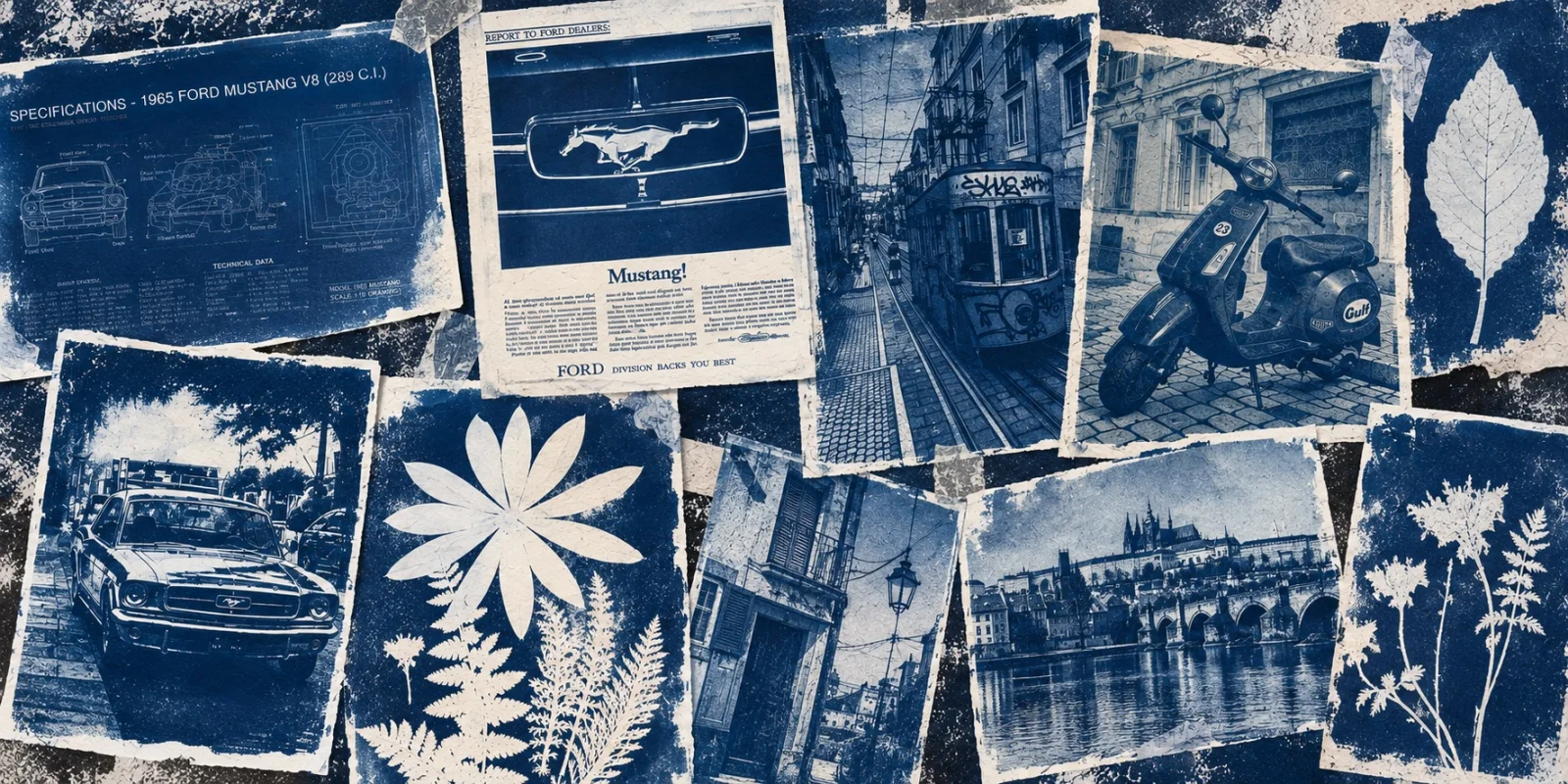
The sun print is one of the oldest photographic techniques. It needs no darkroom and no printer — just paper, a stencil and a bright day.
The motif is prepared as a negative
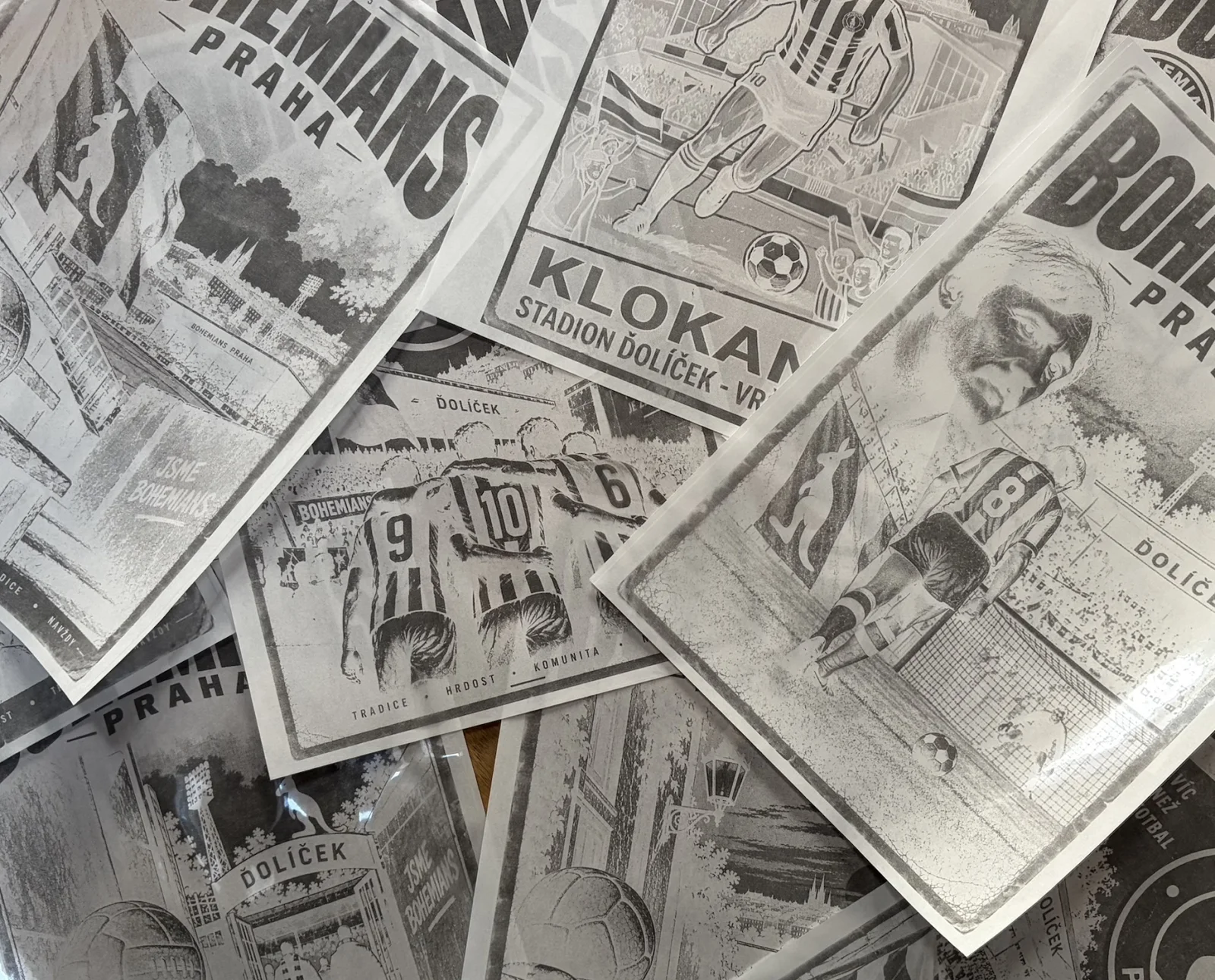
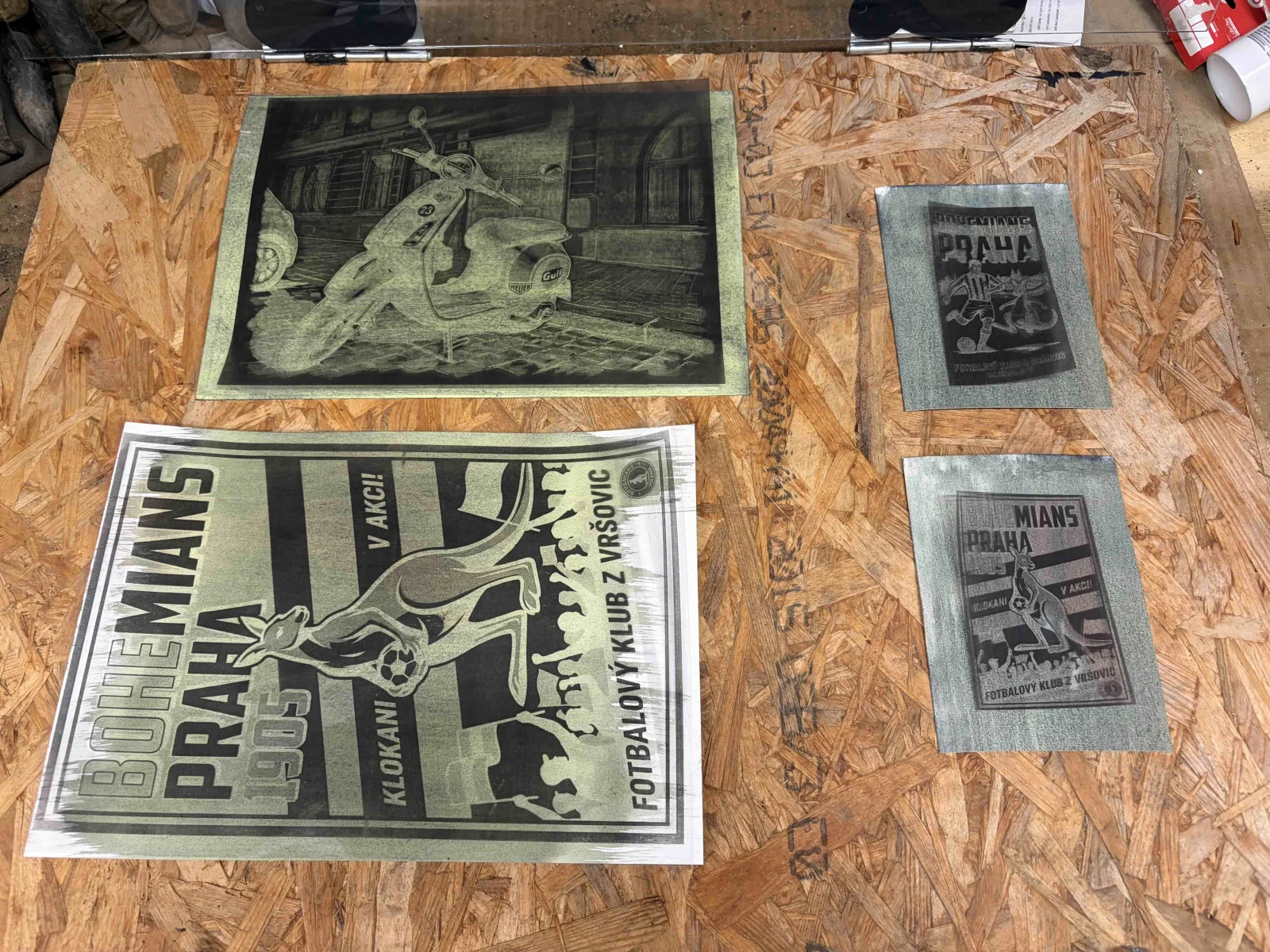
The source becomes a stencil in which the image is inverted. Whatever should stay pale on the sheet must stay dark on the stencil.
The paper is exposed
The specially prepared and dried heavyweight paper is exposed to sunlight. It can absorb a large amount of water and withstand multiple layers of color using the wet-on-wet technique without immediately becoming saturated. The exposure time depends on the sky — in June, just a few minutes are enough, while in winter it can mean a long wait. We don’t use precise exposure with UV lamps, so that every print remains unique.
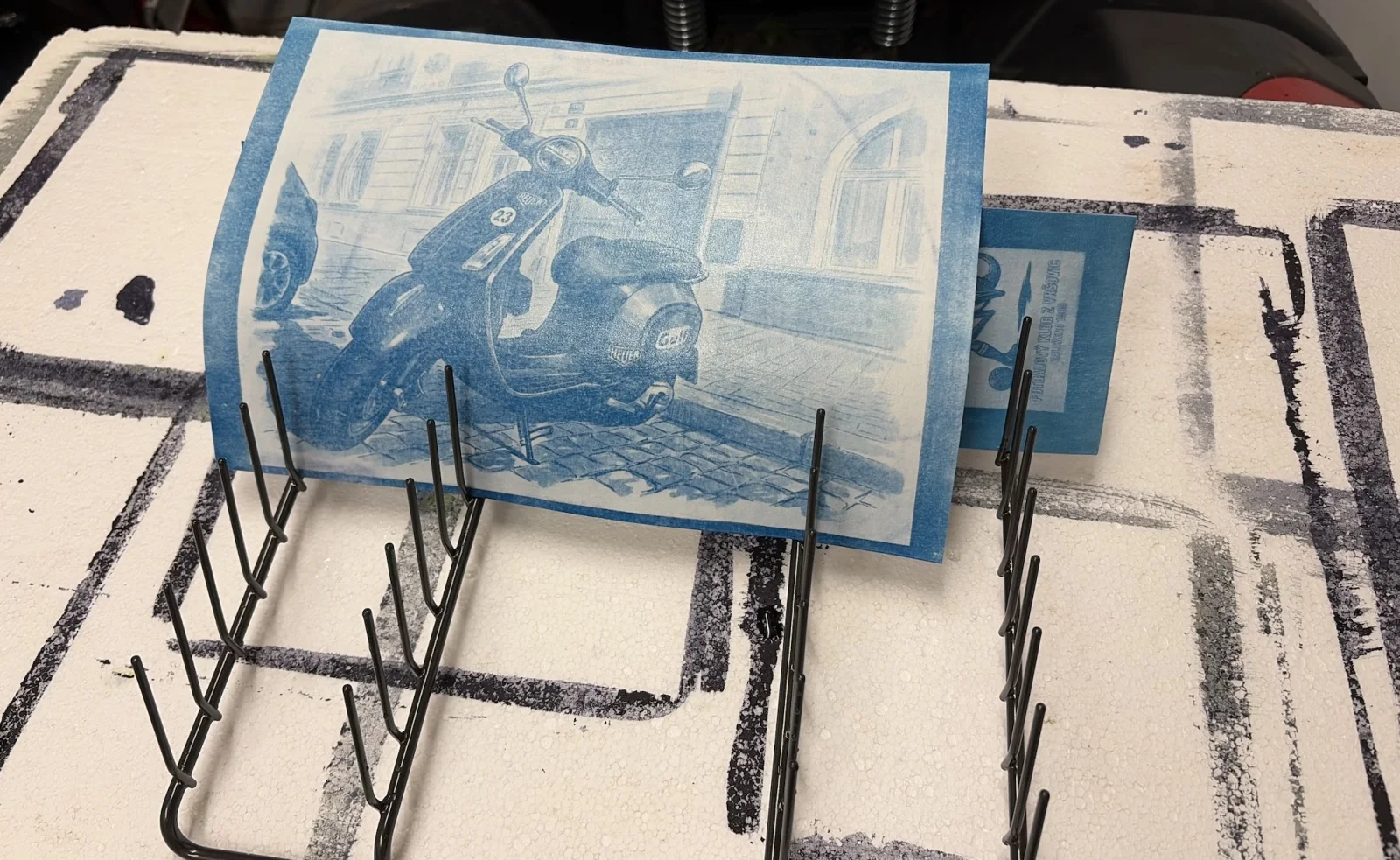
The deep blue appears
After a rinse in water the colour settles and darkens while drying into its characteristic deep blue. The moment the image appears is the best part.
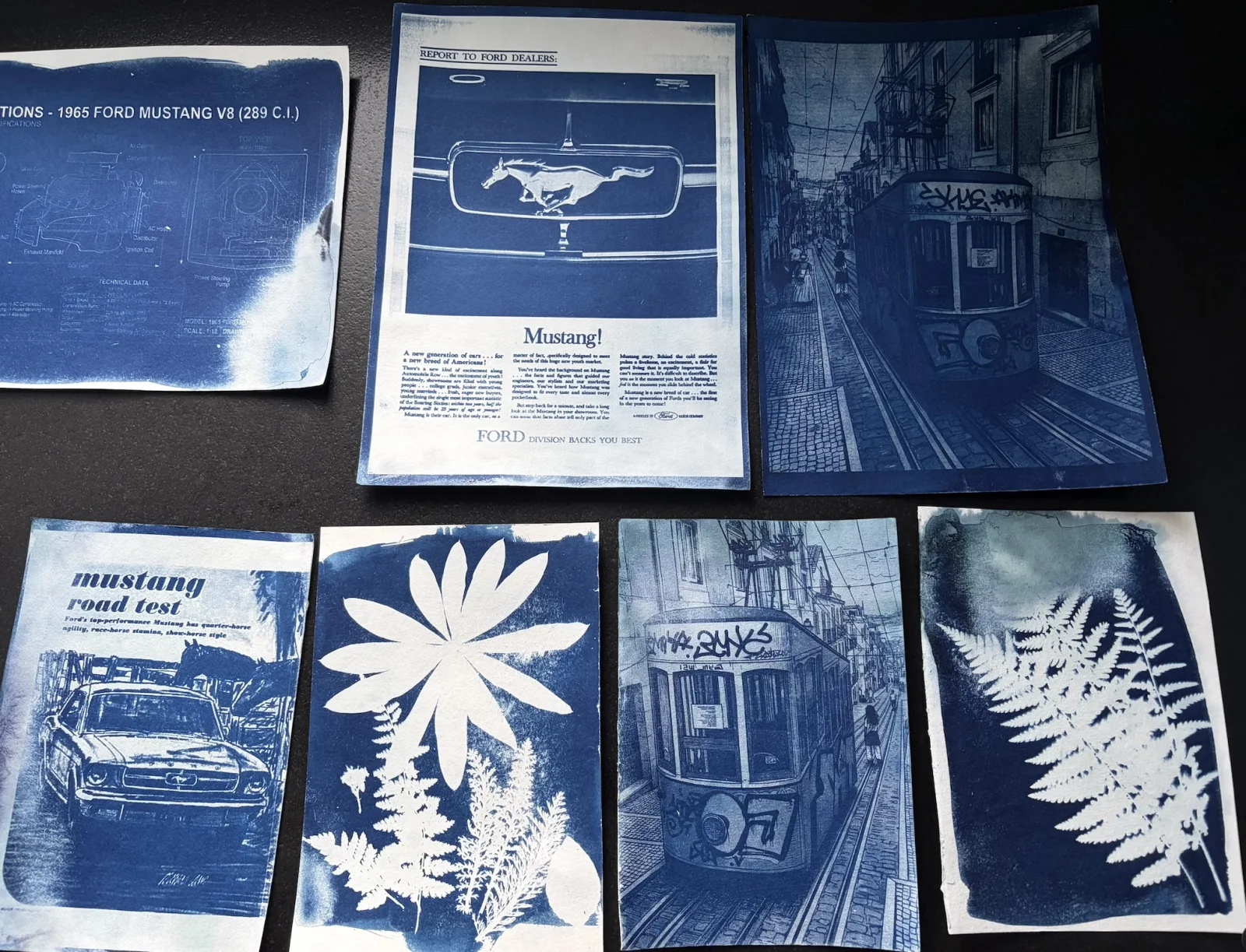
Every piece is an original
Sunlight cannot be measured or precisely controlled. That is why prints from the same edition may vary in both shade and the pattern of their edges. Small variations are a natural characteristic of handmade production, not a flaw. Prints such as A4 size are compatible with commonly available frames, for example the IKEA LOMVIKEN.